
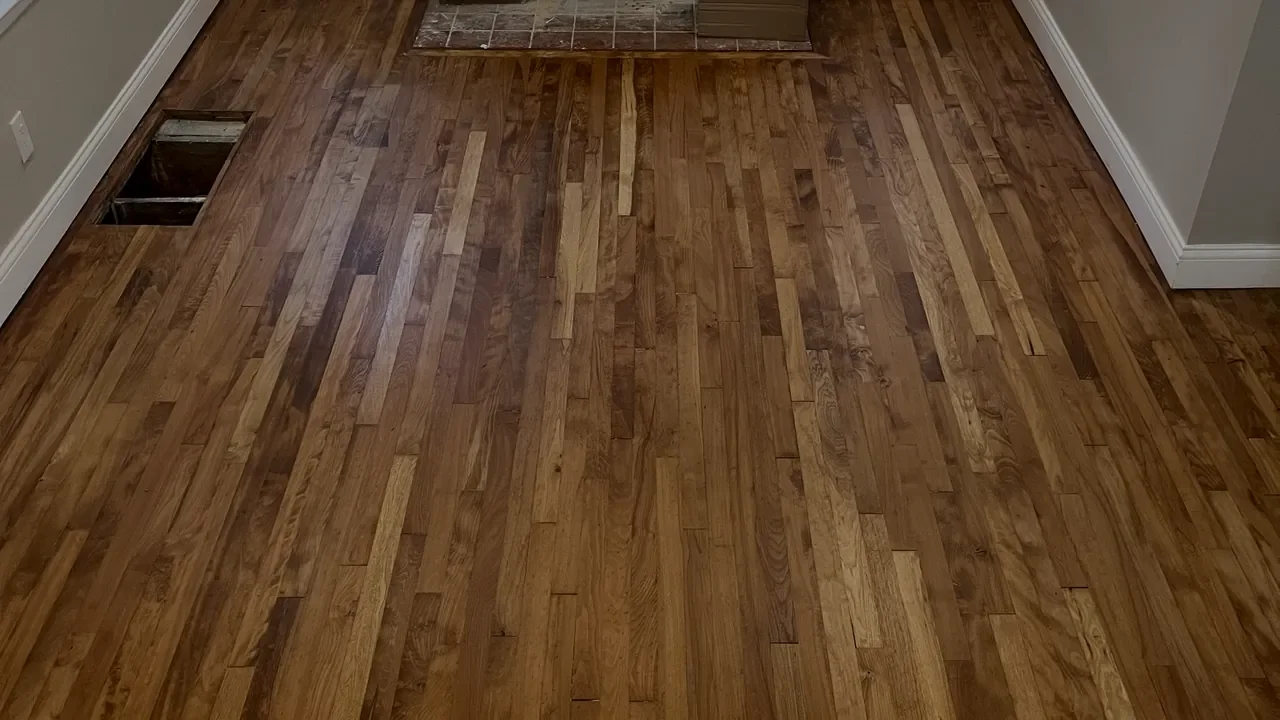
Hardwood Floor Refinishing, Restoration & Repair - Central Kentucky
Those worn, scratched, faded floors you've been staring at? They might be closer to beautiful than you think.
Hardwood floor refinishing is one of the most dramatic and cost-effective home improvement projects you can do. In just a few days, floors that look completely beyond saving can be transformed into something you'd see in a magazine.
Before You Replace Your Floors, Read This
Here's something most homeowners don't realize: real hardwood floors can be sanded down and completely refinished multiple times over their lifetime. A floor that looks absolutely ruined - covered in paint, drywall compound, deep scratches, old wax, pet stains, or 30 years of grime - can often be brought back to beautiful condition through refinishing.
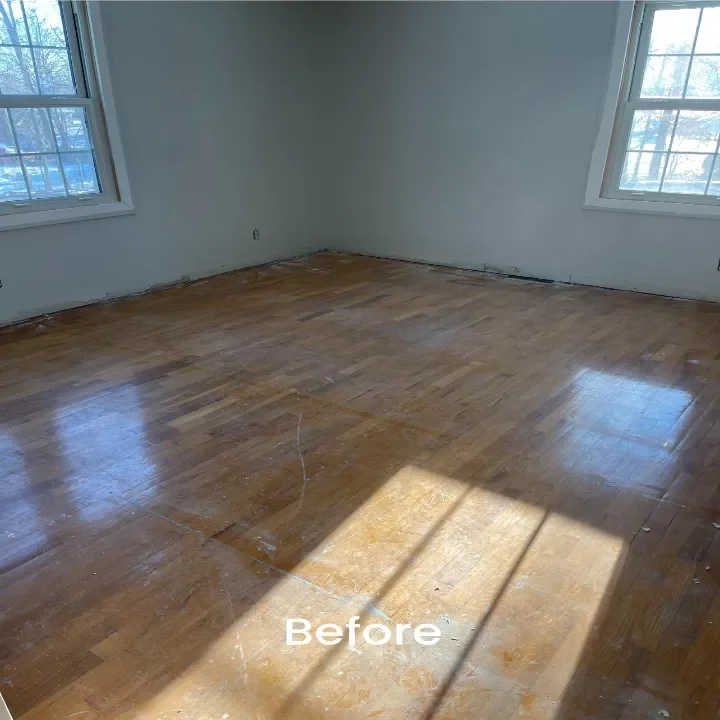
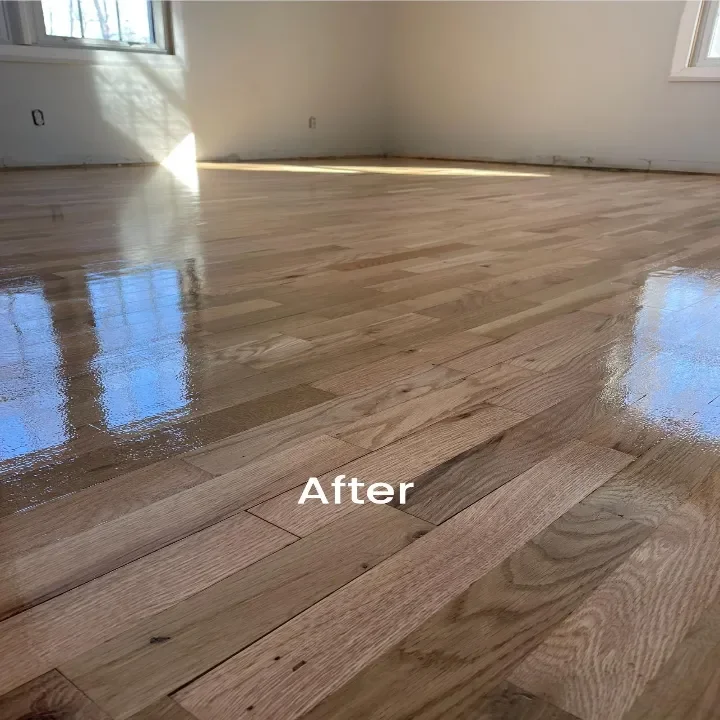
How do you know if your floors can be refinished?
The key factors are: the type of flooring (solid hardwood is the best candidate), the thickness of the wear layer (solid hardwood can typically be sanded 5–7 times in its lifetime), and the nature of the damage. Engineered hardwood with a thick enough wear layer can also be refinished.
Here's what we can almost always work with:
Deep scratches and surface gouges
Pet stains and odor damage (surface level)
Old wax buildup and finish discoloration
Paint drips and drywall mud from renovations
Worn, dull, faded finish with no sheen left
Color that you simply want to change
Light water staining
Here's what might genuinely require replacement or spot repair:
Severe structural water damage or cupping that won't flatten after drying
Boards that have rotted through
Areas where the wood is too thin to sand again (usually from prior refinishes)
Extensive subfloor damage beneath the wood
The honest answer? Most of the time, refinishing wins. And we'll always tell you which situation you're in.
What Happens During a Hardwood Floor Refinishing Project
Refinishing hardwood floors is a detailed, multi-step process. Here's exactly what to expect when you work with L&T Hardwood and Refinishing:
Step 1: Inspection and Assessment
Before any work begins, we do a thorough inspection of your floors. We're looking at the wood species, existing finish type, wear layer thickness, any structural issues, moisture content, and the nature of any damage. This tells us exactly what approach to take and what results are achievable.
Step 2: Furniture and Prep
The work area needs to be completely cleared of furniture. We protect adjacent areas, baseboards, and cabinetry. Any nails that are sticking up get set below the surface so they don't damage our equipment.
Step 3: Initial Sanding
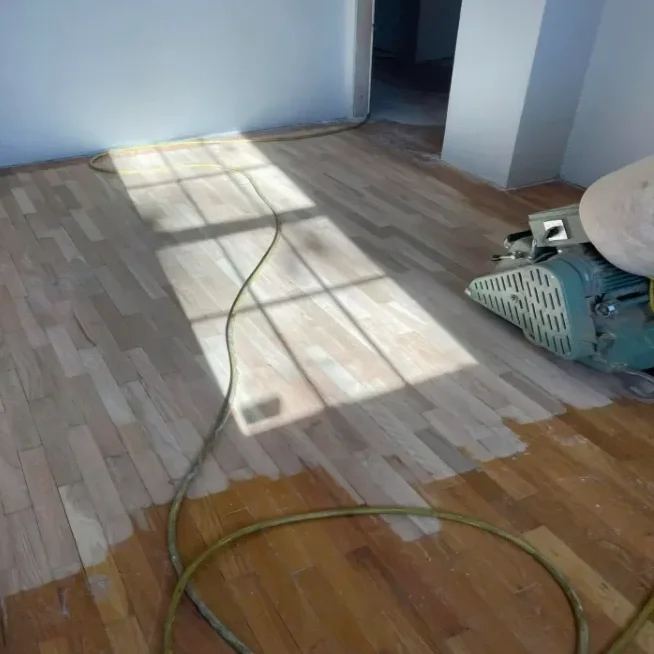
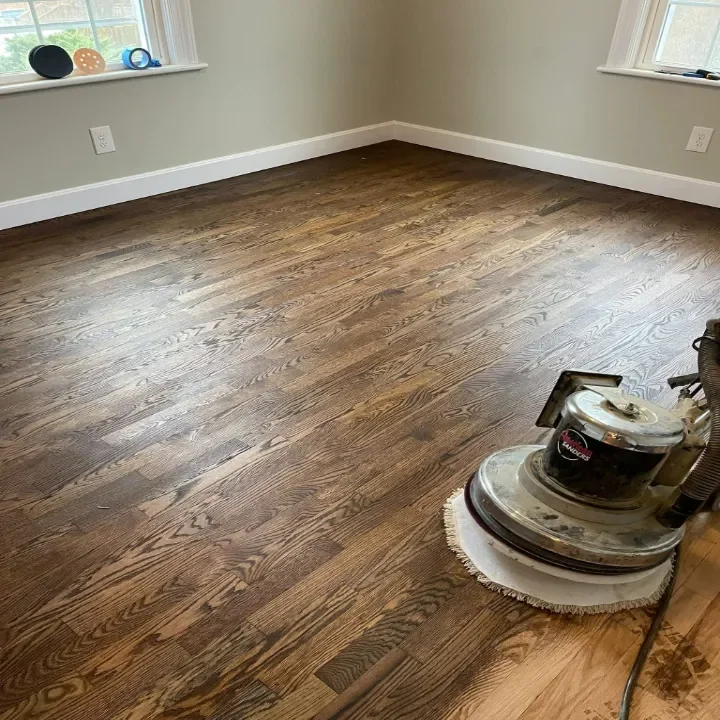
We use professional drum or belt sanders to remove the existing finish and a thin layer of wood from the surface. This is the most dramatic step — watching years of wear and damage disappear in real time. The first pass uses coarser sandpaper to cut through the existing finish, followed by progressively finer grits to smooth the surface.
Step 4: Edging and Detail Work
The big sanders can't get right to the walls. We use edge sanders and hand tools to work into corners, along baseboards, and in tight spaces. This detail work is where a lot of refinishers cut corners , we don't. Every inch of the floor gets the same attention.
Step 5: Stain Application (If Desired)
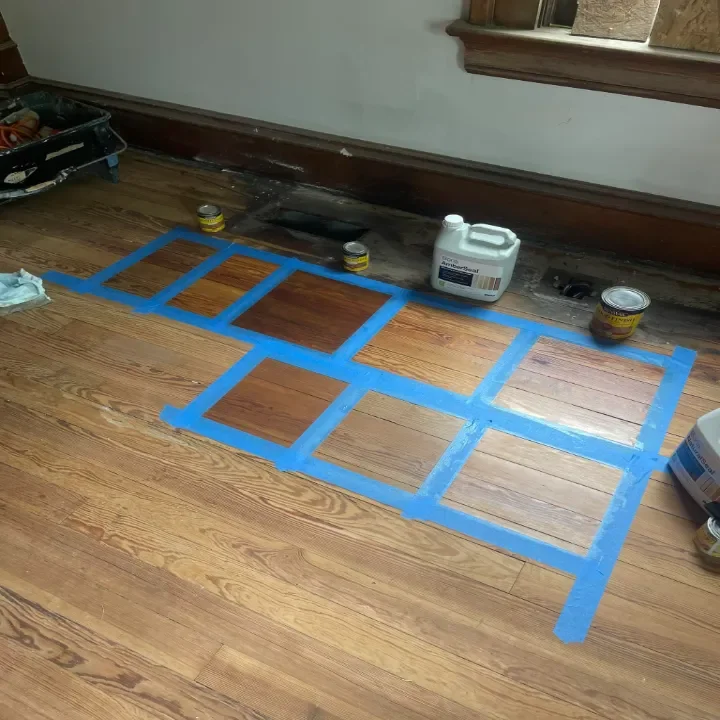
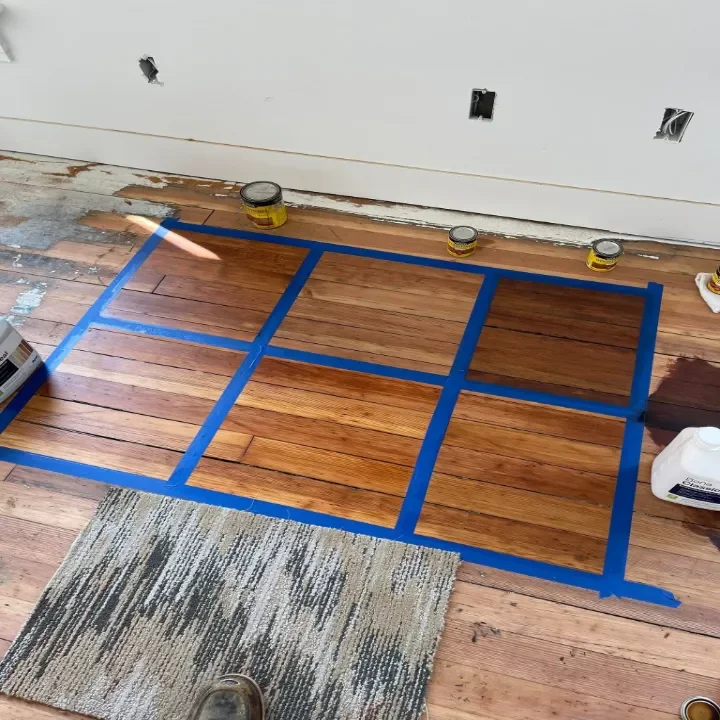
If you want to change the color of your floors, this is where stain is applied. We offer a wide range of stain colors, from natural and light blonde tones to rich dark espresso and everything in between. We always do a small test area so you can see and approve the color before we commit to the whole floor.
Want to keep the natural look of your wood? We can skip stain entirely and go straight to a clear finish that lets the natural grain shine through.
Step 6: Sealing and Finish Coats
Once the stain is dry (or the bare wood is prepped), we apply multiple coats of finish. We offer several finish options:
Oil-based polyurethane: The traditional workhorse. Extremely durable, adds a warm amber tone to the wood, and gets harder over time. Requires longer dry time between coats but is the most battle-tested finish available.
Water-based polyurethane: Dries clear and faster than oil-based. Better for floors where you want the natural light wood color to show through without any amber warming.
Hardwax oil: A more natural, European-style finish that penetrates the wood rather than forming a surface film. Easier to spot-repair but requires more maintenance over time.
We typically apply 2–3 coats of finish, lightly buffing between each coat to ensure perfect adhesion and a smooth final surface.
Step 7: Cure Time and Final Walkthrough
The floor is walkable within 24 hours for most finishes, but full cure takes 7–30 days depending on the finish type. We'll give you clear instructions on care during the curing period. Before we leave, we do a complete walkthrough with you to make sure everything is exactly right.
Hardwood Floor Repair: Fixing What's Broken Without Replacing Everything
Not every floor problem requires a full refinish. Sometimes the damage is isolated and a targeted repair is the smarter, more cost-effective solution. Here's what our repair services include:
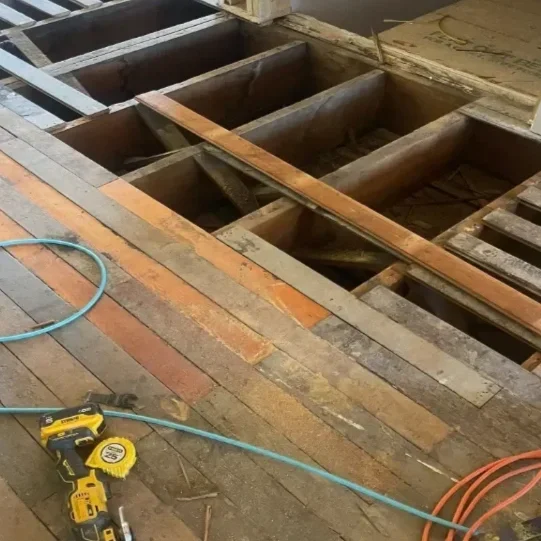
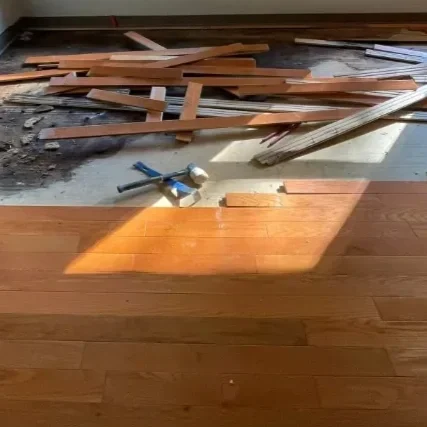
If specific boards are damaged from a pet that went to town on a corner, a furniture leg that gouged a spot, or anything else localized, we can often remove just those boards and replace them with matching material. The replaced section is then blended into the surrounding floor as seamlessly as possible.
Spot Repairs and Board Replacement
Water is hardwood's biggest enemy. A leaking refrigerator, water heater, or washing machine can cause boards to cup, buckle, or swell. Our first step is always to assess whether the floor can be saved. If the damage is caught early enough and the subfloor underneath is still sound, we can often flatten, repair, sand, and refinish the affected area. In more severe cases, damaged boards may need to be replaced.
Water Damage Repair
Cupping and Crowning Repair
Cupped boards (edges higher than the center) are almost always a moisture problem, usually high humidity or moisture coming from below the subfloor. Crowned boards (center higher than edges) often indicate the floor dried too fast after water exposure. We identify and address the moisture source first, then allow the floor to return to equilibrium before sanding.
Pet Damage
Dogs especially can do significant damage to hardwood floors - deep scratches, claw marks, and urine staining. Depending on the depth of the damage and the severity of any staining, we can often address this through refinishing alone. Severe pet staining that has soaked through the wood may require board replacement before refinishing.
Color and Finish: Make It Exactly What You Want
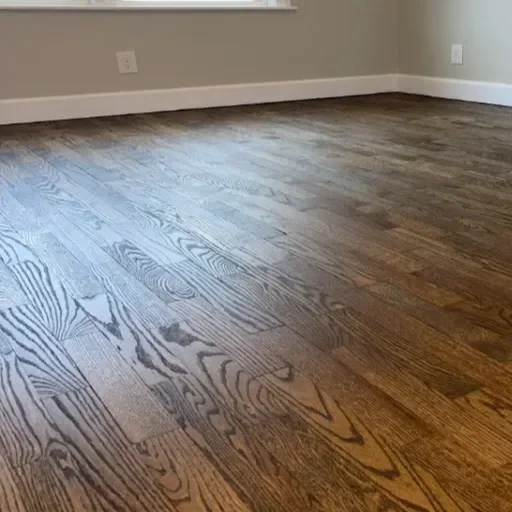
One of the best parts of refinishing is the opportunity to change the look of your floors entirely. You don't have to go back to what they were. We work with a full range of stain colors - cool grays, warm browns, rich espressos, classic natural tones, and everything in between.
Not sure what color is right for your home? We help with that too. Brady will look at your space, your wall colors, your trim, and your overall aesthetic and help you narrow it down to a choice you'll love for years. We can always do a stain sample on your actual floor in a low-visibility area before committing to the color.
Frequently Asked Questions: Refinishing and Restoration
How long does hardwood floor refinishing take?
For most standard residential refinishing projects, the work itself takes 2–4 days. This includes sanding, staining (if applicable), and applying finish coats. The floor is typically walkable with socks within 24 hours of the final coat, but full cure takes 7–30 days depending on the finish type. We'll outline the exact timeline for your specific project during the estimate.
How much does hardwood floor refinishing cost compared to replacement?
Refinishing typically costs significantly less than full replacement, often 50–75% less. When you account for the cost of materials, removal and disposal of existing floors, and reinstallation, replacement adds up quickly. Refinishing delivers a dramatic transformation at a fraction of the price. Call us for a free estimate, the savings might surprise you.
How many times can hardwood floors be refinished?
Solid hardwood floors can typically be refinished 5–7 times, sometimes more, depending on the original thickness of the boards and how much wood is removed with each sanding. Engineered hardwood can usually be refinished 1–3 times depending on the wear layer thickness. We'll assess your specific floors and let you know exactly where you stand.
Can you change the color of my floors during refinishing?
Absolutely, and this is one of the most exciting parts of refinishing. Staining lets you go from a honey-orange oak to a rich walnut, a cool gray, a bleached blonde, or virtually anything in between. We'll help you choose a stain that complements your home and do a sample on your actual floor before committing.
Will there be a lot of dust?
Modern professional sanding equipment uses dust containment systems that capture the vast majority of sanding dust at the source. While some fine dust is inevitable in any sanding project, we take precautions to protect adjacent areas and minimize dust migration throughout your home. We also clean up thoroughly when the job is done.
How long do I need to stay off the floors after refinishing?
We recommend staying off the floors completely for 24 hours after the final coat. Light foot traffic with socks is typically fine after that. For the first 1–2 weeks, avoid placing rugs, dragging furniture, or wearing shoes on the floor. Full cure, when the finish reaches maximum hardness, takes about 30 days for oil-based finishes and about 7 days for water-based.
My floors have pet stains. Can they be refinished?
It depends on the severity. Surface-level staining that hasn't penetrated through the wood can often be addressed through refinishing, though very dark stains may lighten but not disappear entirely. Staining that has soaked through the wood and into the subfloor may require board replacement before the rest of the floor is refinished. We'll give you an honest assessment during our visit.
Ready for Floors You'll Love for Decades?
Getting started is easy. Just reach out for a free, no-pressure estimate and let's talk about what you're imagining for your home or business.